

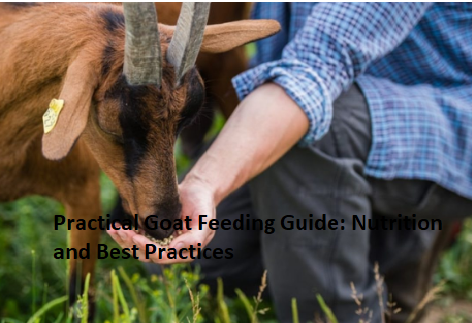
Providing a balanced goat feeding guide is essential for any producer aiming to maintain healthy, productive livestock. Goats are ruminants, meaning they rely on a complex four-compartment stomach to ferment and digest fibrous plant material efficiently. Understanding this biological process is the foundation for success, as improper nutrition frequently leads to metabolic disorders like bloat or urinary calculi.
Whether you are managing dairy goats for milk production or raising meat breeds for market, the principles of rumen health remain the same. By focusing on high-quality forage, clean water, and precise supplementation, you can ensure your herd remains in peak condition throughout every stage of their life cycle.
The most critical factor in a successful feeding program is the ratio of forage to concentrate. A mature, healthy goat should consume roughly 2% to 4% of its body weight in dry matter daily. For a 100-pound animal, this equates to 2 to 4 pounds of dry feed per day.
Fresh, high-quality forage like pasture or hay should make up at least 75% to 80% of this total intake. Grains or supplemental concentrates should be used sparingly, primarily to meet energy requirements during late pregnancy, lactation, or heavy growth periods. Relying too heavily on grain without sufficient fiber can rapidly lead to acidosis, a life-threatening condition caused by a drop in rumen pH.
Understanding Forage Requirements
Forage is the primary fuel source for goats, acting as the main driver of rumen motility and overall digestive health. High-quality grass hay, such as orchard grass or timothy, provides the necessary structure to keep the digestive tract moving effectively. Legume hays, like alfalfa, offer higher protein levels, making them excellent for growing kids or milking does.
You must ensure your hay is free from mold and dust, as goats are notoriously picky eaters and will refuse contaminated feed. If you are grazing your herd, rotational patterns are vital to prevent overgrazing and to break the life cycles of internal parasites.
Managing Concentrates and Grains
While forage is the foundation, grain supplementation is often necessary for specific production goals. Meat goats nearing market weight or dairy goats at the peak of lactation often require more energy than forage alone can provide. When feeding grains, introduce them slowly over a period of 7 to 10 days to allow the rumen microbes to adjust to the change in starch content.
Never exceed 0.5 to 1 pound of grain per 100 pounds of body weight unless under the specific guidance of a nutritionist. This limit prevents the “grain overload” that causes severe digestive distress and potential laminitis.
The Role of Mineral Supplementation
Goats have unique mineral requirements that differ significantly from cattle or sheep, particularly regarding copper. They are highly susceptible to copper deficiency, which manifests as a rough, discolored coat and poor reproductive performance. A high-quality, goat-specific loose mineral mix should be available free-choice at all times.
Avoid “all-stock” blocks, as these often contain insufficient levels of essential minerals like selenium and zinc to meet the specific needs of a goat. Always check the label to ensure the mineral mix is formulated specifically for caprine species to avoid toxicity or deficiency issues.
Water: The Most Overlooked Nutrient
Water consumption is directly linked to feed intake, and a goat will quickly reduce its forage consumption if its water supply is compromised. A lactating doe may drink upwards of 3 to 5 gallons of water per day depending on the temperature and her production level.
Clean the water troughs at least twice weekly to prevent the buildup of algae and sediment that discourages drinking. During winter, consider using a tank heater to keep the water temperature between 45°F and 55°F, as cold water can cause the animal to drink less, leading to impaction colic.
Seasonal Feeding Adjustments
Your approach to feeding must adapt to the shifting nutritional value of the environment throughout the year. In the spring, lush pasture is high in protein but can be low in structural fiber, leading to loose stools or “scours.” Providing access to dry hay even when goats are on pasture helps balance the rumen environment and adds necessary fiber to the diet.
During the winter, when forage quality drops, you may need to increase the protein content of your hay or provide a small amount of high-quality supplement. Adjusting based on body condition scores is more effective than sticking to a rigid, year-round feeding schedule.
Common Dietary Hazards
Goats are naturally curious and will sample a wide variety of plants, some of which can be toxic. Avoid feeding clippings from ornamental shrubs like rhododendrons, azaleas, or yew, as these contain potent toxins that can be fatal in small amounts. Always ensure that your hay source is not contaminated with weeds that might be toxic, such as milkweed or nightshade.
You can find detailed resources on toxic plants through the eXtension Foundation, which provides research-based information on livestock management. Keeping the perimeter of your barn and pasture clear of these hazards is a non-negotiable part of responsible herd management.
Feeding Standards by Animal Category
Different life stages require distinct nutritional profiles to maintain health and productivity. The following table provides a general baseline for daily dry matter intake and protein needs for different types of goats.
| Goat Category | Est. Daily Dry Matter Intake | Crude Protein Requirement |
|---|---|---|
| Maintenance (Dry Doe/Buck) | 2.0% – 2.5% of body weight | 8% – 10% |
| Lactating Doe (Early) | 3.5% – 4.5% of body weight | 14% – 16% |
| Growing Kid | 3.0% – 4.0% of body weight | 16% – 18% |
| Late Gestation Doe | 3.0% – 3.5% of body weight | 12% – 14% |
Essential Feeding Equipment
Investing in the right infrastructure makes daily chores safer and more efficient. Using elevated hay feeders keeps the forage off the ground, which significantly reduces waste and exposure to fecal contamination. Parasite prevention is much easier when goats are not eating from the soil where larvae often reside.
You should also have dedicated bowls for minerals and grains that are heavy enough to prevent being tipped over. Keep all feed stored in rodent-proof containers to prevent contamination and the spread of diseases like coccidiosis.
- Elevated hay racks to prevent waste and parasite ingestion.
- Heavy-duty, tip-resistant bowls for mineral access.
- Rodent-proof storage bins for grain and supplement bags.
- Automatic waterers or easy-to-clean troughs.
- A reliable scale for measuring grain portions accurately.
Frequently Asked Questions
How can I tell if my goat is getting enough food?
The most effective method is to use body condition scoring (BCS). By feeling the goat’s spine, ribs, and sternum, you can determine if they have adequate fat cover. A healthy goat should feel smooth, not bony or excessively fleshy, on the lumbar vertebrae.
Is it safe to feed kitchen scraps to goats?
While goats enjoy variety, kitchen scraps should be treated as occasional treats rather than a staple. Avoid feeding onions, chocolate, caffeine, or any moldy produce. These items can cause severe digestive upset or toxicity and should never replace high-quality forage.
Do goats stop eating when they are full?
Generally, goats are grazers and browsers that will continue to pick at food throughout the day. However, they can overeat high-energy concentrates if given free access, which is why grain must always be rationed. They will naturally regulate their forage intake, but grain intake must be controlled by the owner.
How much grain should I feed a kid goat?
Young, growing kids require high protein to support skeletal and muscle development. Start with a small amount of a high-quality “creep feed” or kid starter once they reach about 3 to 4 weeks of age. Always ensure they have access to their mother’s milk or a quality replacer until they are fully weaned, typically around 8 to 12 weeks.
Why do my goats refuse to eat hay that looks fine?
Goats are extremely sensitive to smell and will reject hay that has even a hint of mold or mustiness. They may also reject hay that has been urinated on or trampled, as they have a natural instinct to avoid feed that has been fouled. Always provide fresh hay in a clean rack to minimize this issue.
Implementing a consistent and balanced approach to your feeding routine is the most reliable way to maintain herd health. By prioritizing high-quality forage and providing appropriate mineral supplementation, you mitigate the risks of common metabolic diseases. Remember that every goat is an individual, and you should adjust your feeding strategy based on body condition scores and production demands.
A well-managed goat feeding guide is not static; it evolves as your animals grow, produce, and age. By observing your herd closely and making small, evidence-based adjustments, you will foster a productive and healthy environment.
Reach out to a local agricultural extension agent if you have concerns about specific forage quality in your region. Consistent monitoring and high standards for feed quality remain the best tools in your management toolkit.
