

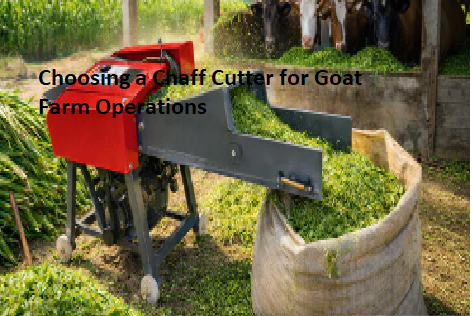
Selecting the right chaff cutter for goat farm management is a critical decision that directly impacts your daily labor costs and feed efficiency. When you process forage correctly, you minimize waste and ensure your herd receives consistent nutrition. Most commercial operations find that a high-quality machine pays for itself within the first year through reduced feed loss alone.
The primary function of this equipment is to reduce long-stem fodder into smaller, digestible pieces that goats can consume without excessive sorting. Goats are notorious for picking through their food and discarding the stems, which leads to significant waste. By using a mechanical cutter, you transform bulky, unpalatable stalks into uniform bite-sized pieces that encourage complete consumption.
Efficiency in a goat farming operation often hinges on how quickly you can process bulk green fodder or dry hay. If you are feeding more than twenty animals, manual cutting becomes physically exhausting and time-consuming. A motorized unit allows you to convert a day’s worth of cutting into a task that takes less than an hour.
Efficiency and Feed Conversion
The most immediate benefit of using a mechanized cutter is the drastic reduction in feed waste. When you offer long-stem fodder, goats often trample up to 30% of the material under their hooves.
A chaff cutter for goat farm setups ensures that the forage is chopped to a length of 1-2 centimeters. This specific size makes it nearly impossible for the animals to pick out only the leaves while leaving the stems behind.
Properly processed feed also improves the rumen function of your goats. When the fiber length is consistent, the rumen microbes can break down the cellulose more effectively.
This leads to better nutrient absorption and faster weight gain in meat breeds. You will notice that your herd spends less time fighting over the “good parts” of the feed, which reduces social stress within the pen.
Types of Chaff Cutters Available
You will primarily encounter three categories of machines when shopping for your farm. Manual hand-cranked cutters remain the most affordable option for very small herds of five to ten goats. These machines are simple to maintain but require significant physical effort to process enough feed for a growing herd.
Electric-powered units are the industry standard for medium to large-scale operations. They come in various sizes, ranging from 1 HP motors for small farms to 5 HP systems for commercial enterprises. These units often feature multiple blades and adjustable output chutes to control the length of the cut material.
Diesel or petrol-powered cutters are designed for off-grid farms or areas with unreliable electricity. These are high-torque machines capable of handling tough, woody stalks that might jam smaller electric motors. While they are louder and require more maintenance due to the internal combustion engine, they offer the highest level of portability for farms with multiple feeding sites.
Essential Features to Evaluate
When evaluating models, look closely at the blade quality and the feed intake mechanism. Hardened steel blades are non-negotiable if you plan on processing dry stalks or corn stover. You should also verify if the blades are reversible or easily sharpenable, as dull blades will tear the forage rather than slicing it cleanly.
The safety features on a modern machine are just as important as the cutting power. Look for units that feature a wide feeding hopper, which keeps your hands at a safe distance from the rotating blades. An emergency stop button or a quick-release mechanism is an essential safety requirement for any motorized unit.
Consider the frame construction and the portability of the machine. If you need to move the cutter between the storage shed and the feeding area, ensure it is mounted on a sturdy chassis with pneumatic tires. A heavy-duty steel frame will vibrate less during operation, which preserves the motor bearings over time.
Cost and Investment Analysis
The cost of a unit varies based on motor power, build material, and throughput capacity. For a small-scale operation, you might spend between $200 and $450 for a reliable entry-level electric unit. Commercial-grade machines, which can process over 500 kilograms per hour, often range from $800 to $1,500 depending on the brand and durability.
You should view this purchase as a long-term capital investment rather than a one-time expense. When you calculate the cost, subtract the value of the feed you are currently losing to trampling and waste. Many farmers find that the machine pays for itself within six to twelve months by saving roughly 20% of their annual feed bill.
| Machine Type | Average Throughput | Best Use Case | Power Source |
|---|---|---|---|
| Manual Hand-Crank | 20-40 kg/hr | Backyard hobby farm | Human effort |
| 1 HP Electric | 150-250 kg/hr | Small commercial farm | Electricity |
| 3+ HP Heavy Duty | 500+ kg/hr | Large herd management | Electric/Diesel |
Maintenance Requirements
Routine maintenance is the secret to extending the lifespan of your equipment. After every use, you should clear out any leftover stalks from the cutting chamber to prevent moisture buildup and rust. Leaving green forage inside the machine creates an acidic environment that will rapidly corrode the steel blades.
Lubrication of the main drive bearings should happen every 50 hours of operation. Keep a small brush and a supply of food-grade oil or grease on hand to ensure the moving parts stay smooth. If your model uses belts, check the tension weekly; a loose belt will slip and lose power, while an overly tight belt will strain the motor.
Sharpening the blades is a task you should perform based on the volume of feed processed. If you notice the edges of the chopped fodder look frayed or “chewed” rather than cleanly cut, it is time to remove the blades for grinding. Keeping them sharp reduces the load on the motor and results in a much cleaner, more uniform feed output.
Integrating Chaff into the Feeding Schedule
Introducing chopped feed into your routine requires a bit of planning to ensure the transition is smooth. Start by mixing the chopped material with your existing long-stem forage for the first week. This allows the goats to acclimate to the texture without digestive upset.
Once they are accustomed to the new texture, you can move toward feeding 100% chopped forage. This is an excellent time to incorporate supplements or mineral mixes. Because the feed is uniform, you can distribute powders or additives evenly across the mixture, ensuring every goat gets its fair share.
Monitor your herd’s body condition score during this transition. While chopped feed is generally more efficient, it can be consumed much faster by the animals. You must regulate the portion sizes carefully to prevent overeating or bloat, which can occur if the animals have unrestricted access to highly palatable, processed feed.
Safety Protocols for Operators
Operating a chaff cutter for goat farm tasks requires strict adherence to safety protocols to prevent injury. Never reach into the hopper while the machine is powered on, regardless of how small the remaining stalks are. If a blockage occurs, always disconnect the power source entirely before attempting to clear the obstruction.
Wear appropriate protective gear, including eye protection and tight-fitting clothing. Loose sleeves or long hair can easily become entangled in the feed intake rollers or the drive assembly. If you are using a gasoline-powered unit, ensure the area is well-ventilated to prevent carbon monoxide buildup.
Keep the area around the machine clear of debris and slippery substances. A stable footing is essential when feeding the machine, as you need to maintain balance while pushing fodder into the hopper. Establishing a clear “safety zone” around the cutter prevents children or livestock from wandering too close during operation.
Common Challenges and Solutions
One of the most frequent challenges owners face is the machine jamming when processing wet or high-moisture green fodder. This usually happens if the feed is pushed into the chamber too quickly for the blades to process. The solution is to maintain a steady, moderate feed rate rather than forcing large bunches into the intake.
Another issue is the inconsistency of the cut length. This often points to a gap between the stationary blade and the rotating blade.
Most professional-grade cutters have an adjustment screw that allows you to tighten this clearance. Regularly checking and adjusting this gap will maintain the desired chop length throughout the season.
If your motor begins to smell like burning insulation, stop immediately and check for an internal jam. Running a stalled motor will burn out the windings in minutes, leading to an expensive repair or replacement. For more detailed technical specifications on livestock equipment, you can refer to the Food and Agriculture Organization of the United Nations for best practices in animal husbandry and feed management.
FAQ
Is it necessary to use a chaff cutter for a small herd?
While not strictly required, even small herds benefit from reduced waste. If you find yourself throwing away a large percentage of hay each morning, the investment in a manual or small electric unit is usually justified.
Can I use a chaff cutter for all types of fodder?
Yes, most machines handle a wide variety of materials including corn stalks, napier grass, and dry hay. However, ensure the machine is rated for the specific moisture content and toughness of the fodder you intend to process.
How often should I sharpen the blades?
This depends on the volume of feed and the hardness of the stalks. A good rule of thumb is to inspect the blades after every 100 hours of use. If the fodder appears ragged, it is time for a sharpen.
What is the most common reason for a machine failure?
Overloading the intake hopper is the leading cause of motor failure. Forcing too much material at once causes the motor to stall, which can lead to overheating or blown fuses.
How do I prevent rust on the blades?
Clean the machine thoroughly after each use to remove residual moisture and plant acids. If you are storing the machine for an extended period, wipe the blades with a light coat of food-grade mineral oil.
Conclusion
Investing in a chaff cutter for goat farm operations is a practical step toward increasing your overall farm profitability. By minimizing feed waste and improving the digestibility of your forage, you create a more efficient and sustainable environment for your animals. The time saved during the daily feeding routine allows you to focus on other critical aspects of herd management, such as health monitoring and breeding programs.
When you select your equipment, prioritize build quality and safety features to ensure the machine serves you for many seasons. Start by assessing your current feed waste levels and choosing a model that fits your herd size and power availability.
With proper maintenance and safe operation, a quality cutter becomes one of the most reliable assets on your property. Reach out to local agricultural suppliers to compare models and see these machines in action before making your final purchase.
