

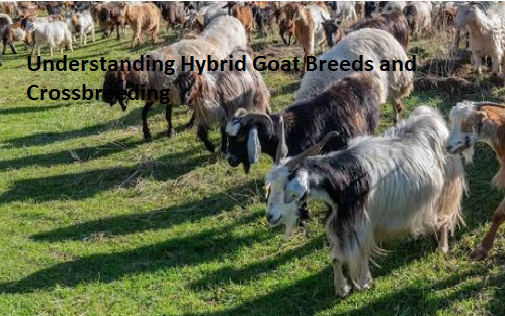
Exploring the world of hybrid goat breeds allows farmers and hobbyists to combine the best traits of different lineages into one productive animal. By carefully selecting parents, breeders often target improvements in milk yield, meat quality, or environmental hardiness.
Understanding the genetic potential of these animals requires looking beyond purebred standards. Whether you are aiming for a specific production goal or simply managing a diverse herd, knowing how crossbreeding impacts health and output is essential for success.
Defining Hybridization in Caprine Genetics
When discussing hybrid goat breeds, it is important to distinguish between crossbreeding within the Capra hircus species and rare interspecies hybrids. Most of what farmers call “hybrids” are actually crosses between two distinct goat breeds, such as a Nubian and a Boer.
True hybrids, involving different species like sheep and goats, are biological anomalies that rarely survive to maturity. These are often referred to as “geeps” in popular media, but they are not a viable breeding strategy for agriculture.
Focusing on intraspecies crossbreeding allows for the expression of hybrid vigor, also known as heterosis. This phenomenon occurs when the offspring of two genetically different parents outperform either parent in specific traits.
Breeders often seek to combine the high milk production of dairy goats with the resilient, muscular frame of meat goats. This strategy can result in a hardy animal that sustains a steady milk supply while maintaining a good body condition.
Common Crossbreeding Goals for Productivity
The primary motivation behind developing hybrid goat breeds is to improve farm efficiency. You might want an animal that thrives on pasture while producing enough milk for a small-scale cheese operation.
Many producers start by crossing a high-yield dairy breed like the Saanen with a hardy, adaptable breed like the Kiko. The resulting offspring often inherit the structural soundness of the Kiko alongside the lactational capacity of the Saanen.
This approach effectively lowers the input costs of the herd. Because hybrid animals are often more disease-resistant, you will likely spend less money on veterinary care and specialized feed supplements.
Growth rates are another frequent target for crossbreeding programs. By introducing genetics from fast-growing meat breeds, producers can ensure their kids reach market weight significantly faster than they would in a purebred line.
Key Differences Between Purebreds and Hybrids
Choosing between purebred stock and hybrids depends entirely on your long-term business model. Purebreds are essential for maintaining breed standards and selling registered breeding stock to other producers.
Hybrids, however, are often the workhorses of the commercial industry. They are bred specifically for performance rather than adherence to a visual show standard or breed registry requirements.
| Trait | Purebred Focus | Hybrid Focus |
|---|---|---|
| Primary Goal | Preservation of Traits | Maximizing Performance |
| Genetic Variance | Low (Limited Lineage) | High (Diverse Lineage) |
| Market Value | High (Pedigree Value) | High (Production Value) |
| Hybrid Vigor | Minimal | Significant |
Hybrid vigor provides a measurable boost to fertility and survivability. In many cases, crossbred does exhibit better maternal instincts and produce higher-quality colostrum for their kids.
The Role of Heterosis in Herd Management
Heterosis is the biological engine that drives the success of most hybrid goat breeds. When you cross two unrelated lines, the mask of recessive, harmful genes is often lifted by the dominant, healthy genes from the other parent.
This genetic “refresh” often results in an animal that grows faster, lives longer, and produces more offspring. It is a fundamental concept in animal husbandry that has been utilized for centuries to improve livestock.
However, it is vital to remember that heterosis is most pronounced in the first generation of offspring. This is known as the F1 generation, which represents the direct cross of two purebred parents.
If you continue to breed these hybrids back to one another, the benefits of heterosis tend to diminish over time. To maintain consistent performance, many successful breeders maintain purebred foundation herds and produce F1 crosses intentionally.
Practical Considerations for Breeding Programs
Starting a breeding program requires a clear understanding of the traits you want to enhance. You should begin by assessing your current herd’s weaknesses and identifying a breed that compensates for those gaps.
If your current goats struggle with parasite resistance, introducing genetics from a breed known for resilience is a logical step. The Kiko and Spanish breeds are frequently used for this purpose due to their evolutionary history in challenging environments.
Record-keeping is the backbone of any successful crossbreeding operation. You must track birth dates, growth rates, milk production, and health events to know if your crosses are actually improving the herd.
* Select parents with documented performance data.
* Prioritize health and conformation over aesthetic features.
* Keep detailed lineage records for every animal.
* Evaluate offspring against the original goals set at the start.
Without data, you are essentially gambling with your herd’s future. Investing in a simple spreadsheet or management software can save you years of trial and error.
Addressing Interspecies Myths
There is a persistent belief that you can routinely cross goats with sheep to create a “hybrid” that combines the best of both. While goats have 60 chromosomes and sheep have 54, mating between the two species is biologically possible but rarely results in a viable pregnancy.
According to research from the United States Department of Agriculture, these interspecies embryos almost always fail to develop fully. Any anecdotal accounts of successful “geep” births are extremely rare and do not represent a viable path for agricultural production.
Focusing your energy on legitimate hybrid goat breeds within the Capra hircus species is the only way to achieve sustainable results. Do not be misled by internet rumors regarding cross-species hybrids.
Maintaining the integrity of your herd means working within the biological limits of the species. Stick to established, proven crossbreeding strategies that have been refined by professional agriculturalists over many generations.
Health and Longevity in Crossbred Herds
One of the most attractive aspects of hybrid goats is their reputation for longevity. Because these animals often possess a more diverse genetic background, they are less likely to suffer from the hereditary weaknesses that can plague inbred purebred lines.
Proper nutrition remains just as critical for hybrids as it is for purebreds. A high-performing crossbred goat requires a balanced diet to support its increased metabolic demands and production levels.
Parasite management is another key pillar of maintaining a healthy herd. Even the most resilient hybrid can succumb to a heavy barber pole worm load if pasture management is neglected.
Implement a rotational grazing system to keep your animals on clean forage. This simple management change often does more for the health of your goats than any supplement or medication could ever achieve.
FAQ About Hybrid Goat Breeds
Do hybrid goats produce more milk than purebreds?
Often, yes, specifically in the first generation (F1) cross. By combining a high-yield dairy breed with a hardy breed, you can achieve a “best of both worlds” scenario where the goat produces significant volumes while maintaining better body condition than a delicate purebred.
Are hybrid goats easier to care for?
Many producers find that hybrid goats are more resilient and require less intensive medical intervention. Their increased genetic diversity can lead to a more robust immune system, though they still require standard care like vaccinations and proper nutrition.
What is the lifespan of a crossbred goat?
A well-managed hybrid goat typically has a lifespan comparable to or slightly longer than its parent breeds, often ranging from 10 to 15 years. Longevity is heavily influenced by quality of care, environmental conditions, and nutritional management rather than just genetics.
Can I register hybrid goats?
Generally, no. Most breed associations only register purebred animals that meet specific breed standards. If you are interested in showing or selling registered animals, you should focus on purebred breeding programs instead of hybrids.
What is the most popular cross for meat production?
Crossing Boer goats with Kiko or Spanish goats is a very popular strategy for meat production. The Boer provides superior muscle growth and frame, while the Kiko or Spanish influence adds parasite resistance and survival skills, creating an ideal commercial meat goat.
Conclusion
Working with hybrid goat breeds offers a practical way to optimize your farm’s productivity and resilience. By leveraging the power of heterosis, you can develop a herd that is better suited to your specific climate and management style. Remember that the goal is not just to mix animals, but to combine traits that solve real-world problems in your production system.
Focus on clear objectives, keep accurate records, and prioritize the health of your animals above all else. As you refine your breeding strategy, you will likely find that these animals provide a distinct advantage in both performance and profitability.
Start small, observe your results, and adjust your breeding choices based on the data you collect each season. Engaging with local agricultural extension services or experienced breeders can also provide valuable insights as you continue to develop your herd.
